Access to better and quality seed brings smallholders farmers to major benefits. Helping produce it can also be good for improved farm livelihoods. Our AVISA work in Tanzania provides good examples.
Tanzania has made great strides in economic growth in the last two decades. Average GDP growth has exceeded five percent per annum. Tanzania is now officially ‘lower middle-income country’. However, poverty reduction is slower than economic growth, and malnutrition remains high. The Accelerated Varietal Improvement and Seed Systems in Africa (AVISA) project started work in Tanzania to help it achieve the second Sustainable Development Goal to end hunger. AVISA supports sustainable agriculture, food security and improved nutrition. Funding comes from the Bill & Melinda Gates Foundation via CIMMYT.
If three key points improved, Tanzanian smallholders farmers could greatly increase their yields and income. They need affordable high-quality seed, better agronomy training, and access to good markets for their produce. Unfortunately, many farmers are miles away from the nearest seed suppliers and agro-dealers; this is because some roads are impassable. With orphan crops, the situation is particularly difficult for the improved seeds to reach to last mile farmers moreover, the few private companies producing certified seed have very limited distribution networks.
The Quality Declared Seeds (QDS) supply channel offers a solution. In this community-based system, QDS farmers sell their production to neighboring smallholders. Registration as QDS producers requires confirmation from the national seed certifier TOSCI that they follow best practice. In the AVISA project, our Foundation is currently focusing on the QDS supply channel. “In 2023, we supported two QDS groups producing bean and groundnut varieties”, explains our Tanzanian Program Coordinator Papias Binagwa. “After seeing the profit they can earn, these QDS farmers are already demanding larger volumes of basic seeds.” By May, the groups are expected to supply three tons of QDS common beans and even more of groundnuts.
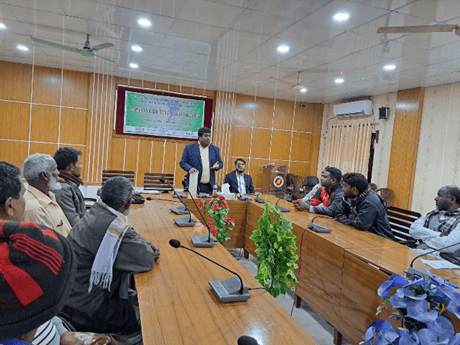
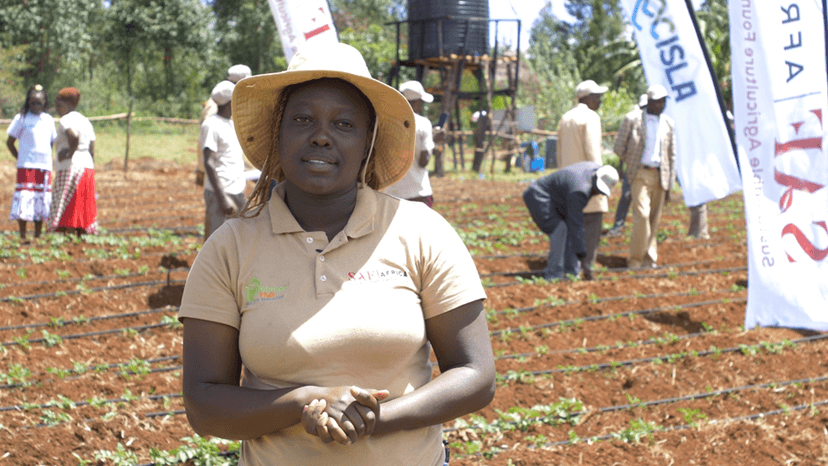
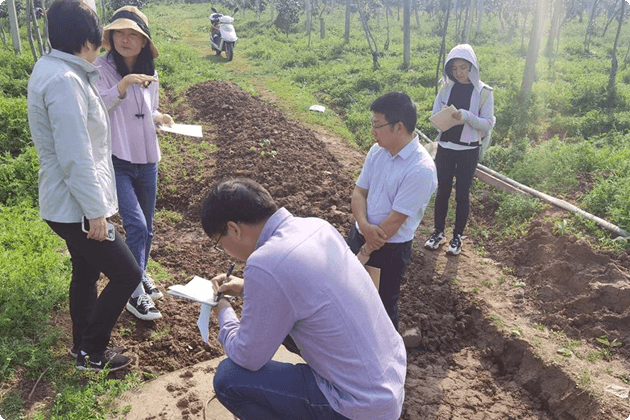
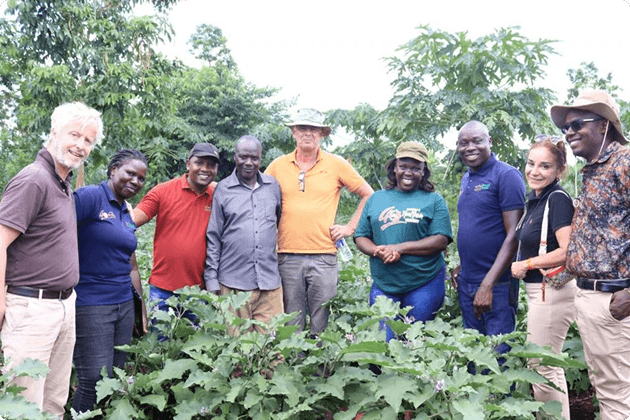
Officials from TOSCI and the national agricultural research institute TARI train the farmers on the necessary regulations and practices. The QDS farms invite local smallholders for information visits. Field demonstrations present the improved varieties and agronomic practices that improve yields.
QDS farmers are full of praise. Baraka Hamis from Karatu district says: “Thanks to this Foundation initiative, I have more sources of income. My bean yields are now better with good seeds. The training has improved my seed handling and management. My extra agronomic knowledge will also benefit my fellow farmers.” Joyce Yuda from the group Chamwiilee Agro Live explains what producing QDS means for her livelihood:
Thanks to seed sales, I have paid my children’s school fees and renovated my house. My food is assured, and I have economic freedom.
An important aspect of our QDS is the partnership with local NGOs. Community Agribusiness Partners (CAP) are a leading example. As part of the AVISA project, CAP decided last year to include common beans and groundnuts in its operations. CAP bring together TARI, unions of co-operatives, QDS groups and grain producers in Iringa, central Tanzania. “CAP put the co-operative unions at the center of their model”, explains Shija Mihambo who is a Senior Agribusiness Manager at CAP. “They distribute basic seed to the QDS farmers and then sell the QDS seed to Agricultural Marketing Co-operative Societies (AMCOs) in the villages.” The unions are also the contact point for larger traders buying members’ output. In addition, they have agreed to start producing basic seed to ensure that QDS farmers get enough.
By teaming up with CAP, a co-operative union can provide good seed and market knowledge to large numbers of smallholders. Tumaini Lupola, manager of the Iringa Farmers Co-operatives Union (IFCU), gives his example: “The IFCU supports 57 AMCOs, which in turn serve more than 40,000 smallholders in four regions.” Interestingly, only 10,000 of these are AMCO members – by serving 30,000 non-members, IFCU quadruples its impact. It does so through about 180 certified QDS farmers.
Mihambo Shija, emphasizes that the partnering goes beyond seeds. “We also provide farmers with loans and work with seed companies to show them new technologies whenever the opportunity arises. Good production relies heavily on technical information; we invite experts to train farmers.” This year, CAP and the Syngenta Foundation are replicating the Iringa model in the regions of Songwe and Ruvuma.
The Songwe Co-operative Union (SORECU) has got eight QDS farmers started with seeds and TOSCI trainings. SORECU Manager Mon Mwampamba feels confident: “This initiative will give even farmers in remote areas access to affordable quality seeds”. As he makes clear, the seeds will help these smallholders diversify and become less dependent on growing coffee.
Nathalie Vignaux is our Foundation’s international manager for AVISA. As she knows, QDS farmers also need access to certified Early Generation Seed (EGS). “We therefore also look for ways to support EGS production in Tanzania”, Nathalie says. “One of our innovative approaches was to help selected private and public producers each tackle their specific challenges during a year of consistent recommendations by an EGS expert.” Such challenges include agronomy, production costs, and infrastructure.
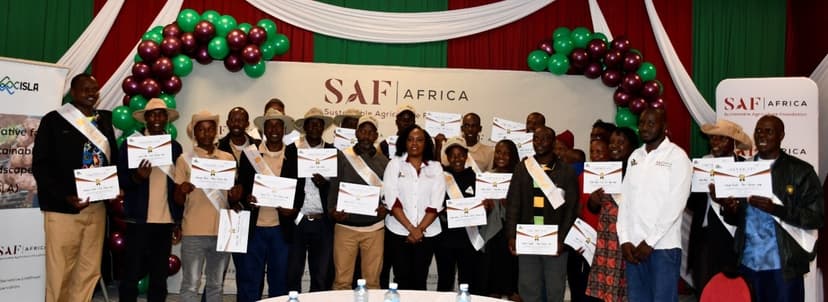
Another approach was to develop and execute EGS production specific training. Here, too, TOSCI and TARI are vital partners. From the training by our Foundation, 11 bean and groundnut EGS producers from five regions were offered the opportunity to enter the “Learn by Producing Program”. They received 100kgs of either pre- basic or basic seed to produce one hectare of EGS seeds.
One of the companies involved is DASPA, which focuses on groundnut and sorghum. Director Aithan Chaula reports that DASPA is now serving 60,000 farmers with EGS seeds. The company has also helped 65 farmers to complete TOSCI training for QDS production. It has established seven QDS demo plots in various areas where there were no awareness on use of improved groundnuts seeds. Chaula is also proud of his company’s social commitment: DASPA has distributed sorghum seeds to 100 schools. “This lets them produce their own grain to feed the children and thus increase academic performance.”
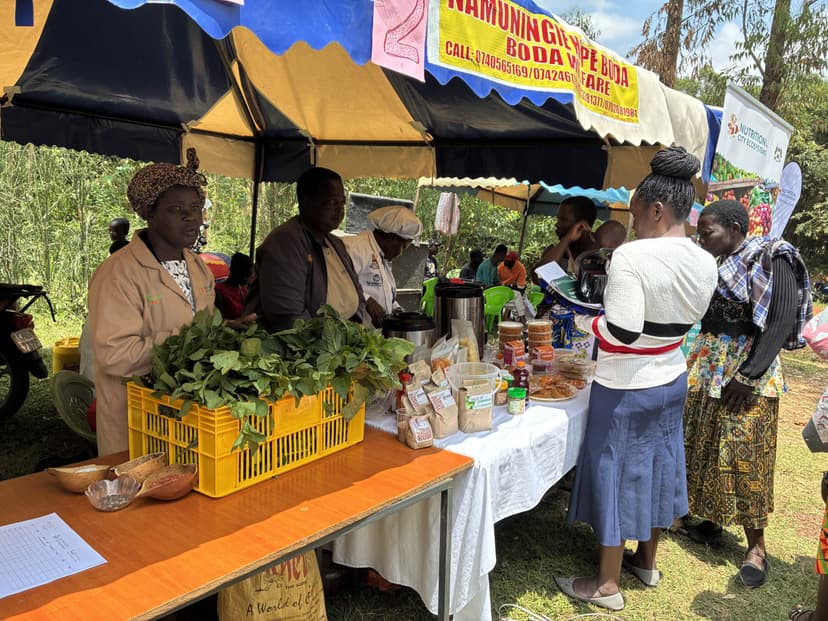
To promote the use of good seed, DASPA has been presenting the new varieties to farmers and value chain partners at agricultural shows. Distribution of small packs of groundnut seed helped raise seed demand. “We’ve had an influx of orders from several regions. Farmers are keen to start producing QDS to improve their income and livelihoods”, says Aithan Chaula.
DASPA produces EGS on a 45-acre farm. “Many people in the sector view this as a risky venture”, comments from AVISA Country Coordinator Mr. Emmanuel Mwenda. “DASPA continues to prove that it’s a profitable business. Mechanization saves the company time and money. Mr. Chaula’s team has also drilled a 150-meter-deep borehole for off-season irrigation.” Access to water all year will help DASPA become a larger and more resilient EGS producer.
Nathalie Vignaux and Papias Binagwa always emphasize a guiding principle of our Foundation: “Meeting farmers’ needs is essential”. Smallholders will only adopt varieties that they can both grow and sell successfully. Looking ahead for AVISA in Tanzania, Nathalie Vignaux emphasizes that in order to have impact, the different approaches need to continue. “Farmers have to experience several growing seasons to see the value of adopting a new practices, crop or variety. During that time, it is critical that they have consistent and reliable partners until the claimed value translates into real farmer value, and the smallholders can continue sustainably on their own.” * Accelerated Varietal Improvement and Seed Systems in Africa
Disclaimer: This write-up was created by the Syngenta Foundation for Sustainable Agriculture (SFSA), now rebranded as the Sustainable Agriculture Foundation (SAF).
Climate Smart Agriculture
21 Aug 2023