
Climate Resilient Agricultural Advancement in Barind (CRAAB)
Donor:Hongkong Shanghai Banking Corporation Limited (HSBC)
Tenure:01 Jul 2023 - 01 Dec 2025
| Duration | Jul 2023 – Jun 2026 |
| Location | Rajshahi, Chapainawabganj, and Naogaon |
| Outreach | 25000 Farmers |
| Partners | NA |
Context:
Barind Tract, situated in North-West Rajshahi Division of Bangladesh at 24.40-24.80°N, 88.30-88.80°E and occupies about 1,600 km2 (159,964 ha) area. It is clearly differentiated from other parts of the country because of its terraced land with soil of low fertility, sparse vegetation, absence of major river channels, and comparatively low rainfall with a long dry period, from October to May. It is regarded as the most drought prone area of the country due to its relatively low (compared to the rest of Bangladesh) and erratic precipitation (average 1,440 mm average annual rainfall but this can vary spatially and seasonally between 790 and 2,200 mm), limited groundwater reserves and recharge, poor water holding capacity of surface soil in the post-rainy season along with high summer air temperature, with maximums usually 35-40°C in April-May. The High Barind Tract (HBT) is relatively uplifted {11-48 m. (Ref. Rashid, M. B., S.U. Islam & M. Badrul Islam (2015) “River morphology and evolution of the Barind Tract, Bangladesh”. Journal of Nepal Geological Society, Vol 49, pp 65–76.) above sea level} and not subject to annual inundation like the flood plain areas of Bangladesh. Adequate rainfall is important for recharge of the groundwater level as well as for long-term sustainability of the environment for flora and fauna; however, crop performance largely depends on distribution and variability of the rainfall matching with the growth stages of the crop. Climate variability directly affects the agricultural systems and any consequent yield reduction thus affecting the livelihoods of 75-80 % of the HBT population that directly depends on agriculture and its related sectors. The Climate Resilient Agricultural Advancement in Barind (CRAAB) Project is a catalytic initiative planned as part of the targeted transformative agenda for sustainable groundwater-based irrigated agriculture in the Barind Tract. The project is being implemented by SFSA Bangladesh in partnership with DASCOH Foundation sponsored by The HSBC Bank. The overarching goals of this project are to promote community-wide adoption of climate-smart agriculture in Barind Tract to increase the income of 25,000 smallholder farmers by 25%, through cultivating fallow land on 1,250 ha, reducing groundwater abstraction by 1.53 million m3 (Rice 1.4 M m3 and Mango 0.13 M m3), and creating additional employment opportunities for 400 youth and women.
Specific Objectives:
- Increase water use efficiency, farm productivity and fallow land utilization through climate-smart technologies
- Empower women and youth in agriculture by creating job opportunities and agri-entrepreneurship programs
- Develop partnerships with public and private sector stakeholders for innovations, value chain strengthening and export promotion
Key Activities:
To meet the aim of efficiency (“More Crop per Drop”) as well as water productivity (“Value per Drop”), it has been intervening in three interventions:
- Increase practice of remunerative Climate Smart Resilient Agro-technologies (CSRA):
• Capacity development and field trial support for Ultra High-Density production for mango using drip irrigation
• Laser Leveling & Alternate Wetting and Drying for rice
• Sponsor agro-entrepreneurship for disadvantaged woman/ethnic communities
B. Climate Smart Market System Development:
• Farmers’ Hubs for youth off-farm entrepreneurship
• Support ag-startups for product sourcing from farmers and development of export readiness for fruits and vegetables
C. Research and Community Partnership:
• Facilitation of Farmers Registration for carbon financing • Research partnership with LightCastle Partners on CSRA technology for horticultural production advancement communication, action research for the forward market and results dissemination.
Achievements (so far):
Increase practice of remunerative Climate Smart Resilient Agro-technologies (CSRA):
Training:
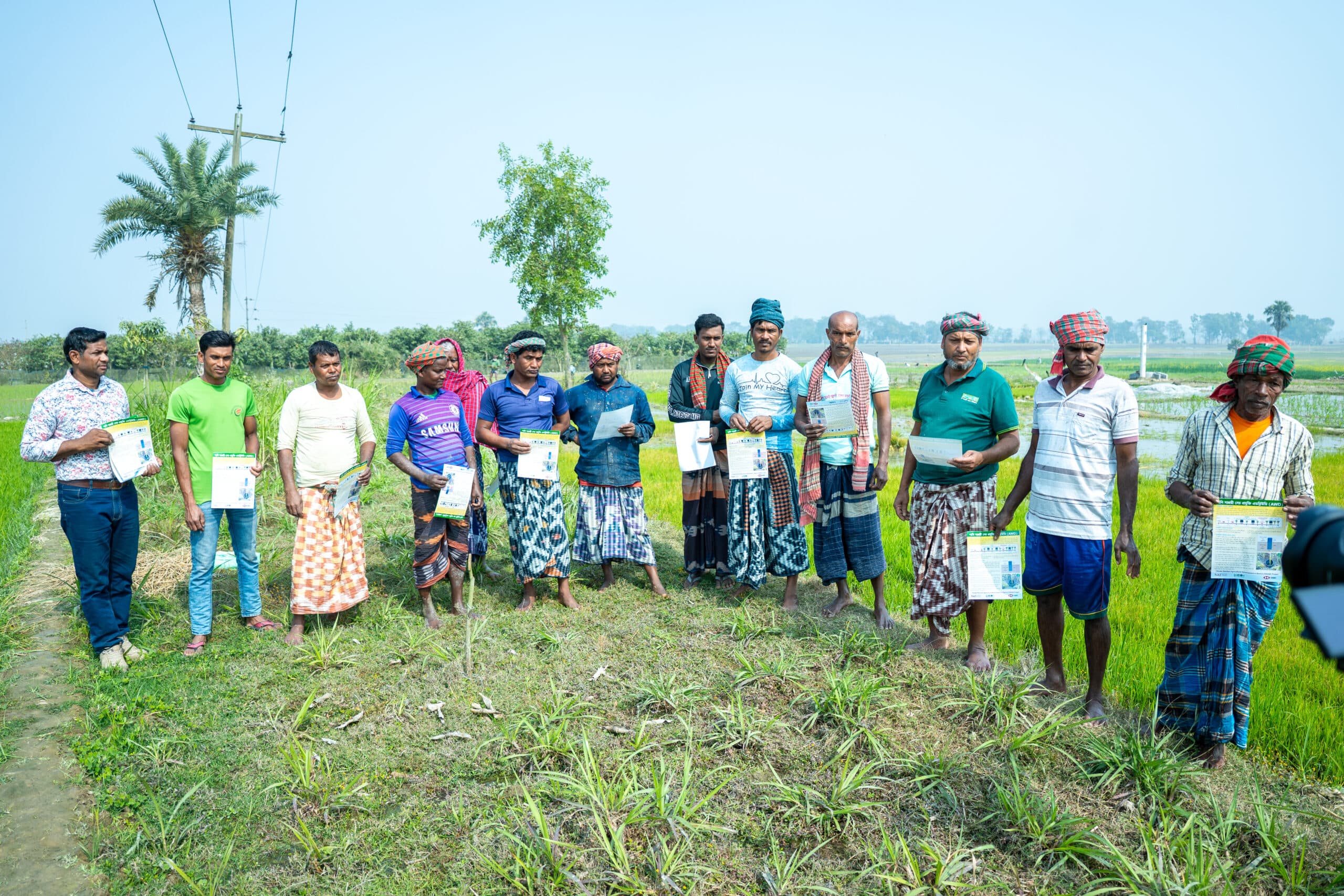
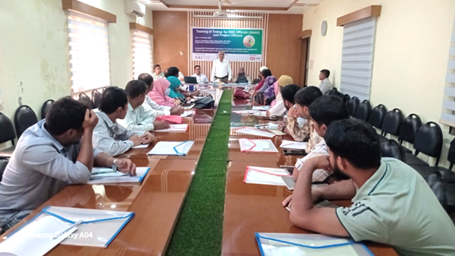
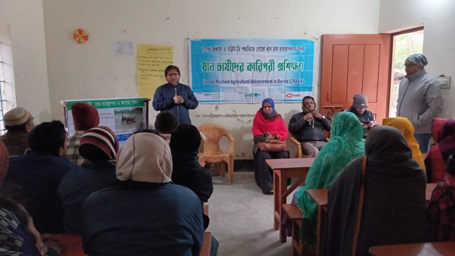
- 72 Department of Agricultural Extension (DAE) officials received training of trainers (ToT) on Ultra-High-Density Plantation (UHDP) of mango, rice cultivation with Alternate Wetting and Drying (AWD) practices, homestead vegetable gardening, and vermicompost production.
- 8,216 beneficiaries received capacity development training on rice cultivation techniques, including laser leveling and AWD practices.
- 7,001 beneficiaries received training on UHDP of mango with drip irrigation systems.
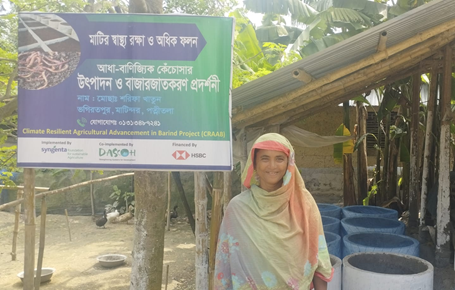
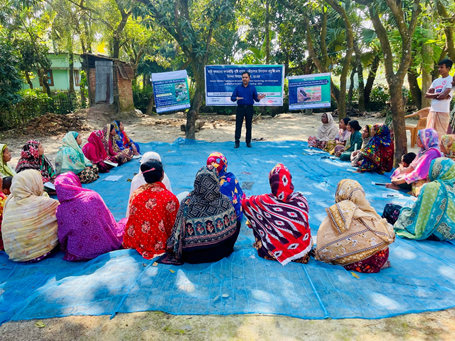
- 5,125 female farmers received training on homestead nutrition gardening, vermicompost production technology, and marketing.
Demonstrations:
- 251 demonstrations on rice cultivation were conducted, following CSRA technologies to improve water efficiency.
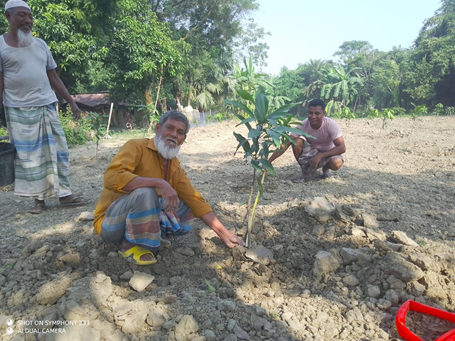
- 48 demonstration plots were established for UHDP of mango with drip irrigation systems.
- 66 demonstration homestead year-round nutrition gardens were established.
- 58 semi-commercial vermicompost units were established as a source of organic manure.
Knowledge Sharing and Learning:
- 27 farmers’ field days were organized to showcase profitable CSRA practices in rice cultivation.
- 2 exposure visits were organized on UHDP of mango.
Farmers’ Registration for Carbon Credit:
- 1,105 farmers have completed registration for carbon financing.
- A total of 2,321.8 acres of Ultra-High-Density Mango Orchards have been enrolled under the Carbon Credit.
Climate Smart Market System Development:
- Establishment of Farmers’ Hubs: 25 Farmers’ Hubs were established, including women-led hubs, serving as localized support centers for agricultural communities. These hubs generated a total revenue of BDT 53,370,691.
- Input Business: Successfully managed input business, generating sales worth BDT 24,016,642.
- Forward Market Sales: Facilitated forward market sales worth BDT 28,869219.
- Farmer Onboarding: Onboarded 18346 new farmers to the Farmers’ Hub network.
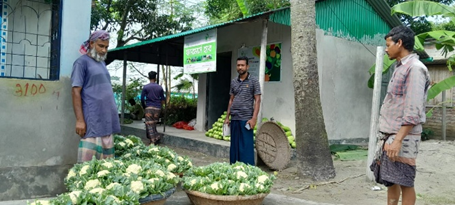
- Commercial Vegetable Cultivation: Supported commercial vegetable cultivation on 1236 hectares of land.
Research and Community Partnership:
- There an agreement between SAF Bangladesh and LightCastle Partners for action research on the fruit forward market, from local gardens to the global market.
Related Projects & Programs
Integrated Agri-Support Program for improving production, nutrition and climate resilience for farmers in Bangladesh (IASP)
Sustainable Agriculture Foundation International Association (SAFIA)
This project aims to strengthen Bangladesh’s agriculture by promoting climate-resilient, diversified, and market-oriented farming systems. It focuses on improving farmers’ productivity, income, and nutrition through the development of Farmers’ Hubs, digital services, and better market access. Ultimately, it seeks to enhance food security, build climate resilience, and improve the livelihoods of smallholder farmers and vulnerable communities
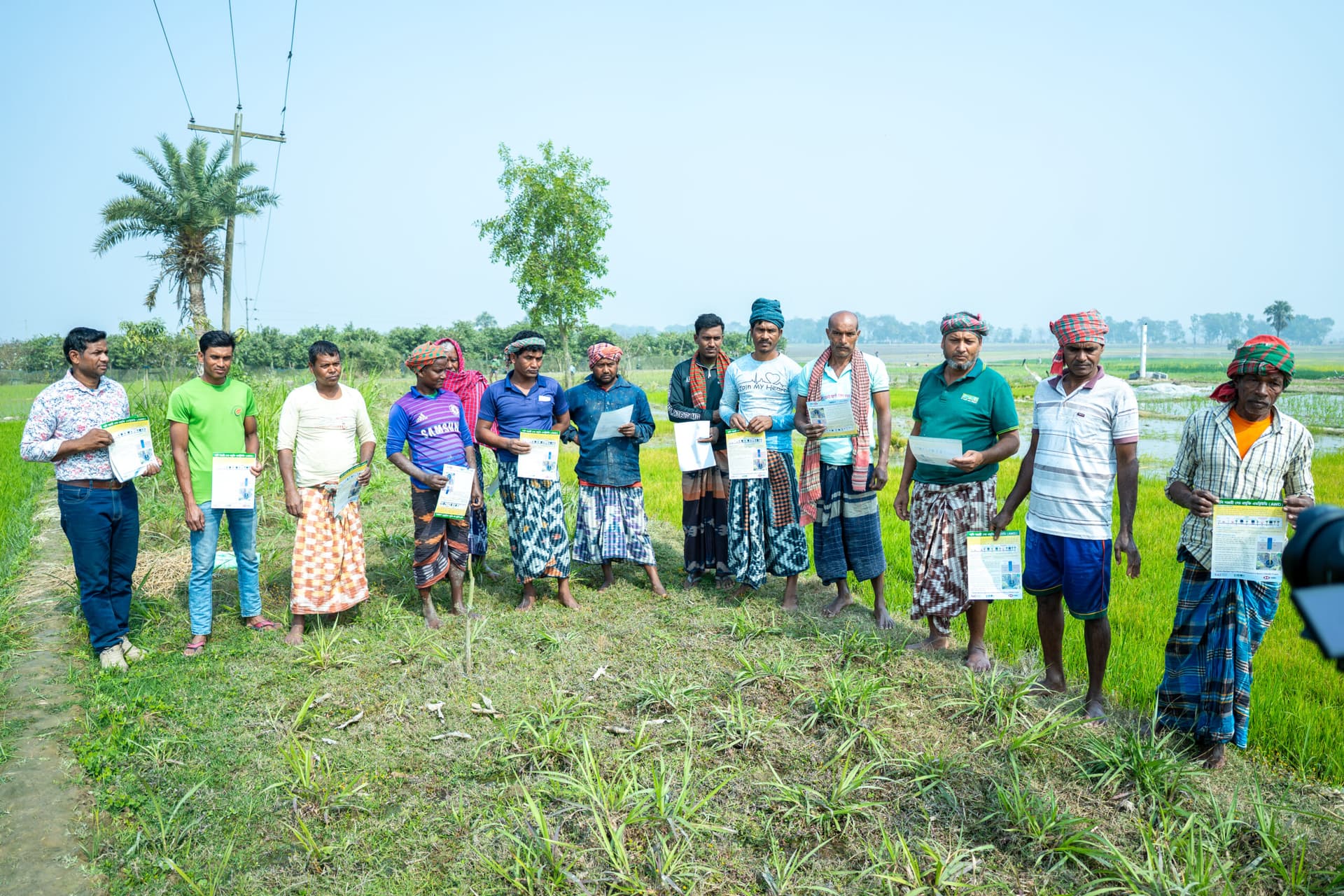
Climate Resilient Agricultural Advancement in Barind (CRAAB)
Hongkong Shanghai Banking Corporation Limited (HSBC)
This project's goal is improved well-being of 25,000 farmers in Barind Tract with climate-smart agriculture practices, boosted irrigation efficiency and farm productivity, and expanded local agribusiness opportunities connecting a strong public-private stakeholder network.