
Agri Entrepreneurs Capacity Development
Donor:Bangladesh Govt. World Bank and IFAD through PARTNER-DAM part
Tenure:01 Sept 2024 - 30 Jun 2028
| Duration | Sep 2024 – Jun 2028 |
| Location | Rajshahi, Rangpur, Sylhet and Chittagong Divisions |
| Outreach | 25 participants/batch (Total approximately 1500 participants) |
| Partners | NA |
Context:
Department of Agricultural Marketing is a specialized government department under the Ministry of Agriculture whose vision is to contribute to the national economy through establishing a producer, trader, and consumer-friendly, effective agricultural marketing system and agribusiness development. Department of Agricultural Extension (DAE), Department of Agricultural Marketing (DAM), Bangladesh Agricultural Research Council (BARC), Bangladesh Agricultural Development Corporation (BADC), Bangladesh Agricultural Research Institute (BARI), Bangladesh Rice Research Institute (BRRI), and Barind Multipurpose Development Authority (BMDA) will play a role as the main implementing agency in this project titled “Program on Agricultural and Rural Transformation for Nutrition, Entrepreneurship and Resilience in Bangladesh (PARTNER)” under the Ministry of Agriculture. This project will be implemented from 01 July 2023 to 30 June 2028 and funded by the GoB, IFAD, and World Bank. The project will create 20,000 new entrepreneurs (12,000 women and 8,000 youth) through the capacity building of agricultural entrepreneurs. It will also provide mentoring and value chain-related services to sustain the entrepreneurs under DLI-7.
Sustainable Agriculture Foundation has proven experience and skills in developing agri-entrepreneurship. This includes ideation, training, mentoring, incubation, and scaling programs across different regions of Bangladesh. To support young enterprises, it employs a world-class incubation and acceleration program, underpinned by a well-structured Standard Operating Procedure (SOP), advanced tools, and a pool of experts. One of its successful and robust agribusiness models, “Farmers’ Hub”, innovated, pilot-tested, and implemented in Bangladesh, is now being replicated in seven countries across Asia and Africa. SAF Bangladesh has strong expertise in agroecology, GAP protocol, digital record-keeping, agribusiness modelling, planning, and management orientation. As a not-for-profit organization, sustainability is at its core. After training, it continues to follow up to understand the impact of the training.
Objectives:
Key objective of DLI-7 is to increase Entrepreneurship and Access to Services and specific objectives:
- Value Chain Development:
Supporting the development of efficient and resilient agricultural value chains to connect producers with markets and consumers.
- Access to Services:
Improving access to essential services like finance, technology, and information for farmers and other actors in the agricultural sector.
- Entrepreneurship Promotion:
Fostering entrepreneurship and supporting small businesses within the agricultural sector to create economic opportunities.
Key Activities:
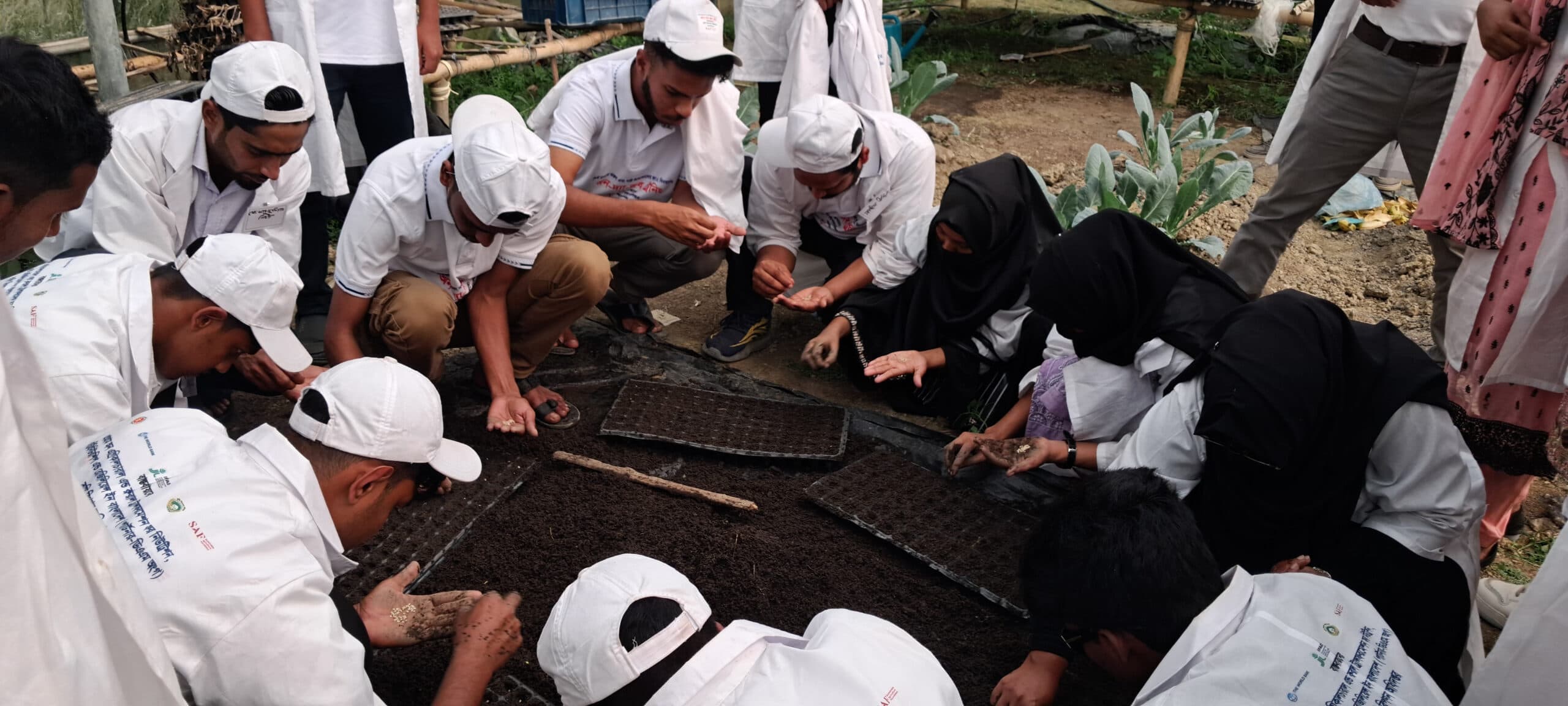
- Provide capacity building training to selected entrepreneurs (60% women) on Agri input business specially focused on vegetable seedlings, fruits and flowers saplings, Vermi and tricho-compost.
- Connect trained entrepreneurs with an input source
- Provide mentoring support to train entrepreneurs
- Follow up and troubleshooting.
Achievements (so far):
- Conducted 9 batch training (trained 225 entrepreneurs, male 146, Female 79).
- 70 entrepreneurs started businesses and generated income (female 32).
Related Projects & Programs
Integrated Agri-Support Program for improving production, nutrition and climate resilience for farmers in Bangladesh (IASP)
Sustainable Agriculture Foundation International Association (SAFIA)
This project aims to strengthen Bangladesh’s agriculture by promoting climate-resilient, diversified, and market-oriented farming systems. It focuses on improving farmers’ productivity, income, and nutrition through the development of Farmers’ Hubs, digital services, and better market access. Ultimately, it seeks to enhance food security, build climate resilience, and improve the livelihoods of smallholder farmers and vulnerable communities
Climate Resilient Agricultural Advancement in Barind (CRAAB)
Hongkong Shanghai Banking Corporation Limited (HSBC)
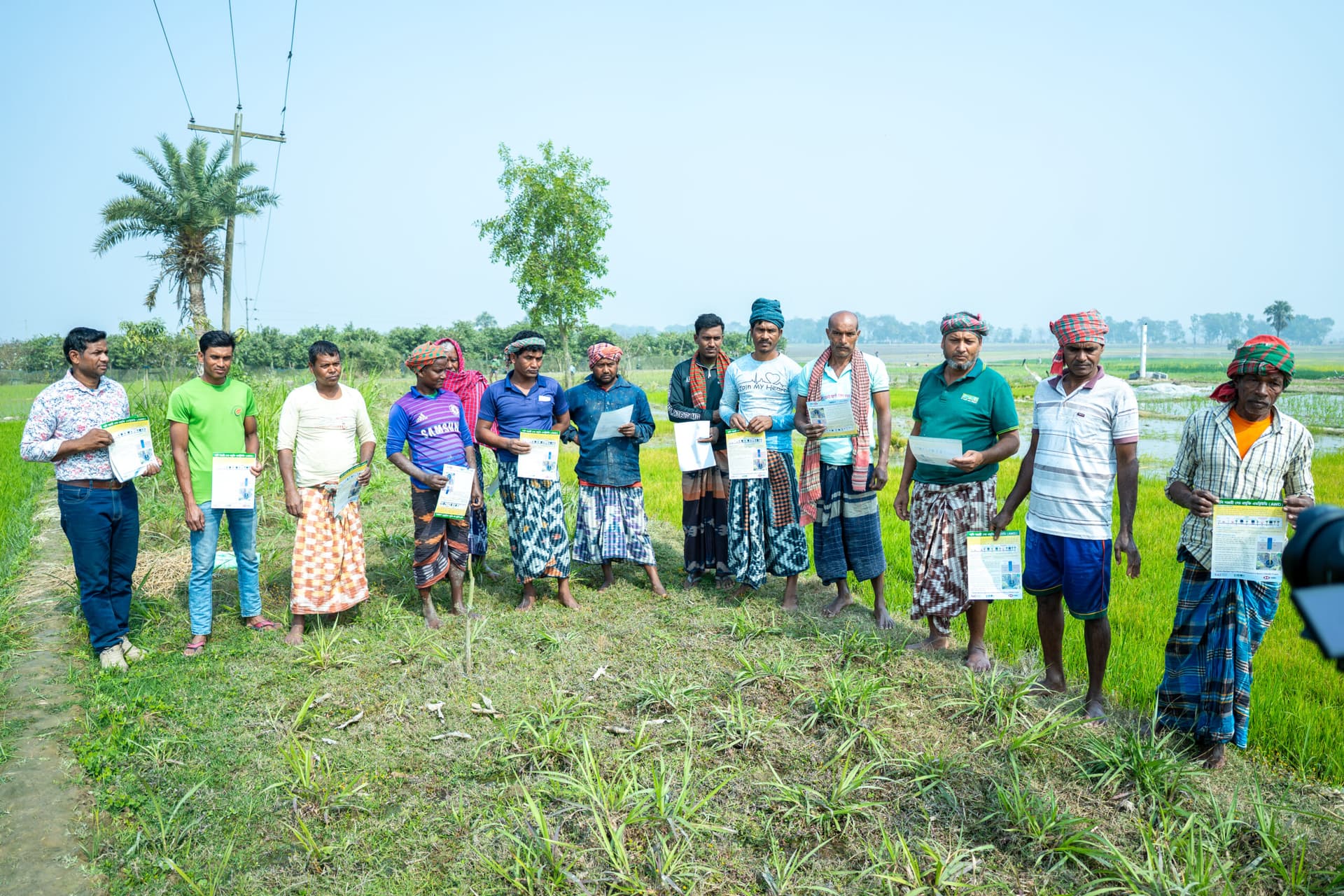
This project's goal is improved well-being of 25,000 farmers in Barind Tract with climate-smart agriculture practices, boosted irrigation efficiency and farm productivity, and expanded local agribusiness opportunities connecting a strong public-private stakeholder network.