
Farmers’ Hub Conference 2025 – Rajshahi
Building Climate-Resilient Market Systems in the Barind Tract
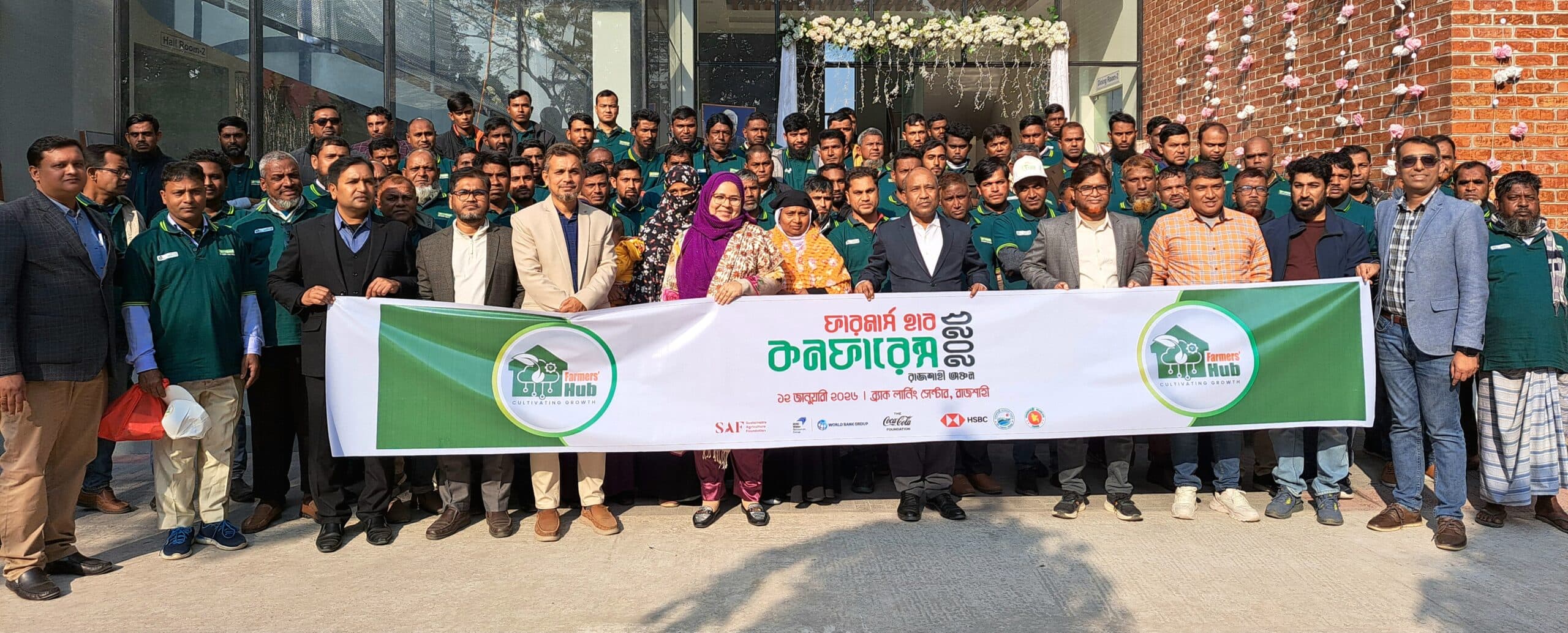
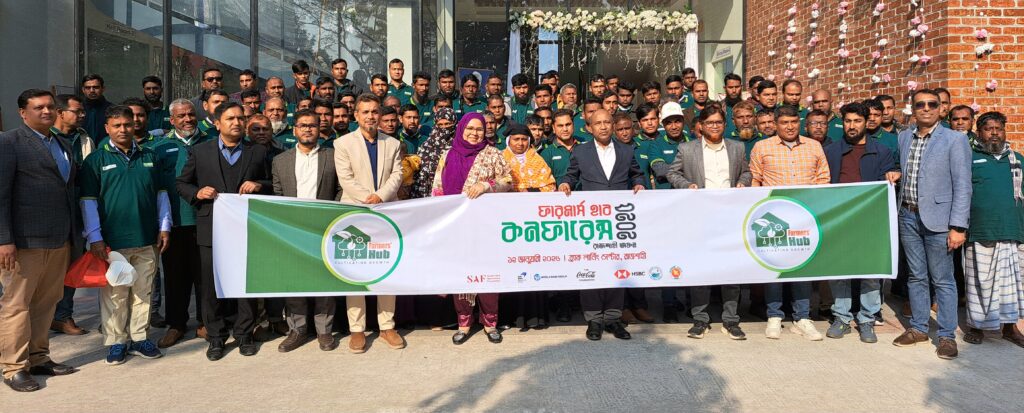
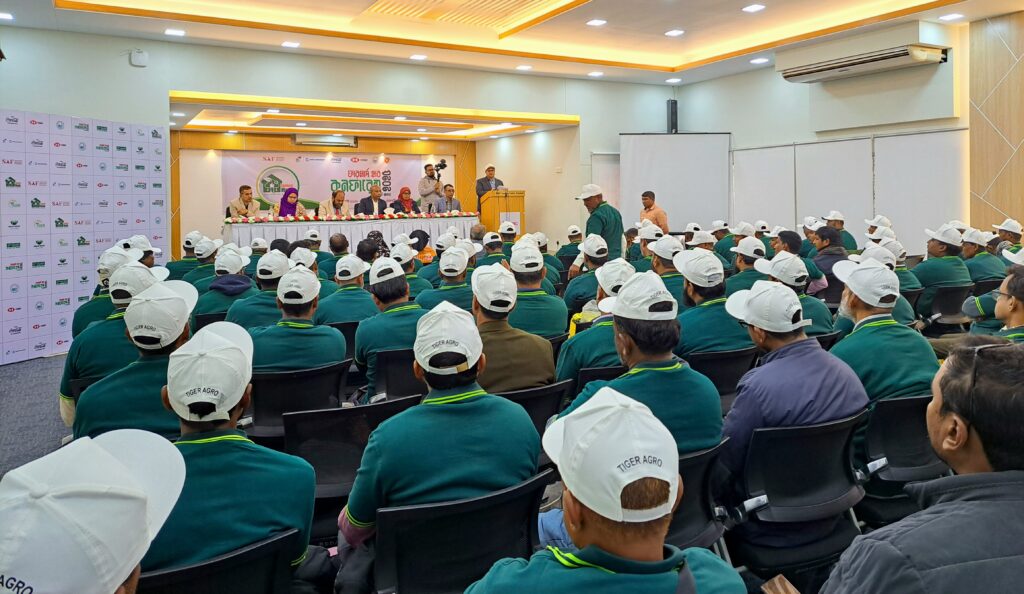
On 12 January 2026, more than 120 agricultural stakeholders, including 100 Farmers’ Hub entrepreneurs, gathered at the BRAC Learning Center, Paba, Rajshahi, to explore how market-led innovation and water-efficient technologies can transform the drought-prone Barind Tract into a climate-resilient agricultural growth zone.
The Farmers’ Hub Conference 2025 – Rajshahi was organized by Sustainable Agriculture Foundation Bangladesh under the Introducing Water Efficient Technology (IWET) and Climate Resilient Agricultural Advancement in Barind (CRAAB) projects. The IWET Project is supported by 2030 Water Resources Group and funded by The Coca-Cola Foundation, while the CRAAB Project is supported through a philanthropic grant from HSBC Bangladesh.
Addressing Climate Stress in Bangladesh’s Rice Heartland
The Barind Tract – covering large parts of north-western Bangladesh- is one of the country’s most climate-vulnerable regions. Declining groundwater levels, recurrent droughts, and rising irrigation costs continue to threaten agricultural productivity and farmer livelihoods. In this context, scaling water-efficient irrigation and strengthening market systems have become critical for sustaining food security and rural incomes.
The conference provided a platform for farmers, policymakers, private sector actors, development partners, and financial institutions to engage in practical discussions on how market-driven solutions can accelerate climate adaptation in agriculture.
The Farmers’ Hub Model: Markets at the Center
A central theme of the conference was the Farmers’ Hub model, a decentralized, entrepreneur-led platform designed to connect smallholder farmers to quality seeds, seedlings, saplings, irrigation services, advisory support, and structured markets. By functioning as localized aggregation and service centers, Farmers’ Hubs are helping reduce farmers’ dependence on middlemen, ensure fair farm-gate prices, and improve access to climate-smart agricultural inputs.
Discussions highlighted how Farmers’ Hubs are not only strengthening backward and forward market linkages but also enabling the last-mile delivery of water-efficient technologies, including Alternate Wetting and Drying (AWD), particularly vital in drought-prone landscapes like Barind.
Policy and Private Sector Perspectives
Senior officials from the Department of Agricultural Extension (DAE) and the Department of Agricultural Marketing (DAM) emphasized the urgency of scaling water-efficient irrigation technologies to address groundwater depletion in northern Bangladesh. They stressed the need for stronger coordination between extension services, market incentives, and private sector engagement to move climate-smart practices beyond pilot stages.
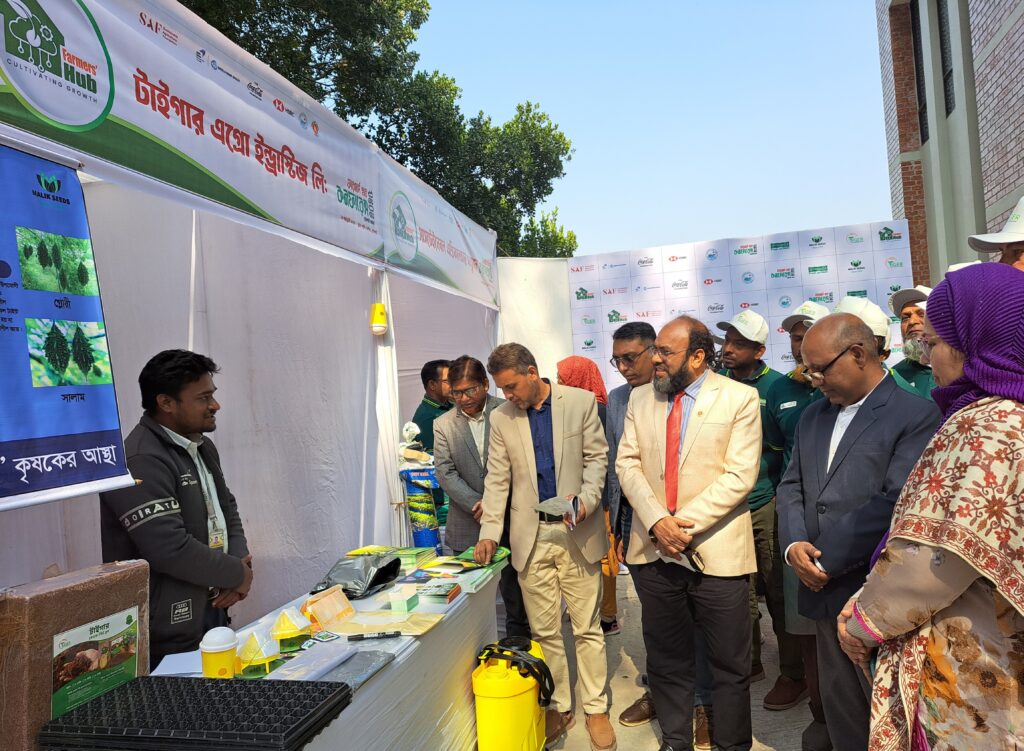
Private sector representatives from A R Malik Seeds, Ispahani Agro Limited, PRAN Agro Limited, Tiger Agro Limited, Lalteer, and BRAC Seeds explored opportunities to collaborate with Farmers’ Hubs through input supply partnerships, aggregation models, quality assurance mechanisms, and structured market arrangements. These discussions underscored the importance of aligning commercial incentives with farmer-centric and climate-resilient outcomes.
A Shared Commitment for Climate-Resilient Growth
The conference concluded with a shared commitment to:
- Strengthen and expand Farmers’ Hub networks
- Promote adoption of water-efficient irrigation technologies
- Deepen public–private partnerships that place farmers and agri-entrepreneurs at the center of climate-resilient development
By bringing together diverse stakeholders under one platform, the Farmers’ Hub Conference 2025 – Rajshahi reinforced a collective vision for the Barind Tract: a market-driven, climate-resilient agricultural future led by local entrepreneurs and empowered farmers.
To read more – https://thebangladeshtoday.com/?p=31958

Bangladesh Delegation Explores Climate-Smart Rice Technologies at IRRI
Los Baños, Laguna, Philippines | 18-21 February 2026 A six-member delegation from Banglad...
Read More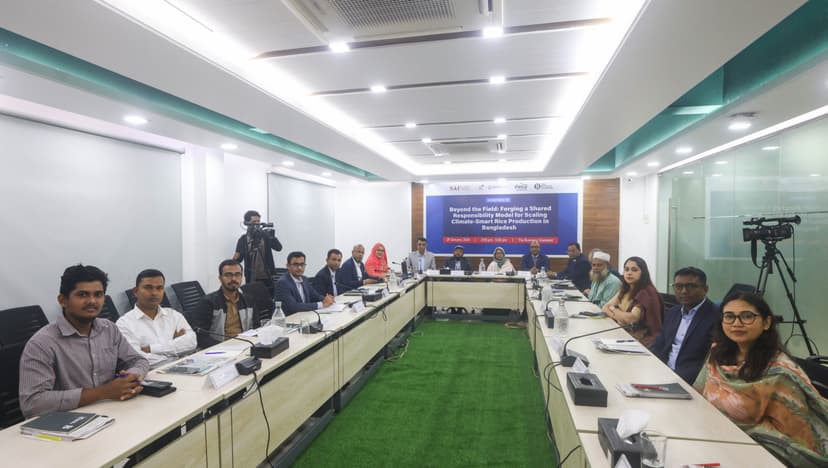
Beyond the Field: Forging a Shared Responsibility Model for Scaling Climate-Smart Rice Production in Bangladesh
Roundtable Highlights | 29 January 2026 | Hosted by 2030 WRG & SAF Bangladesh | Media Partner: ...
Read More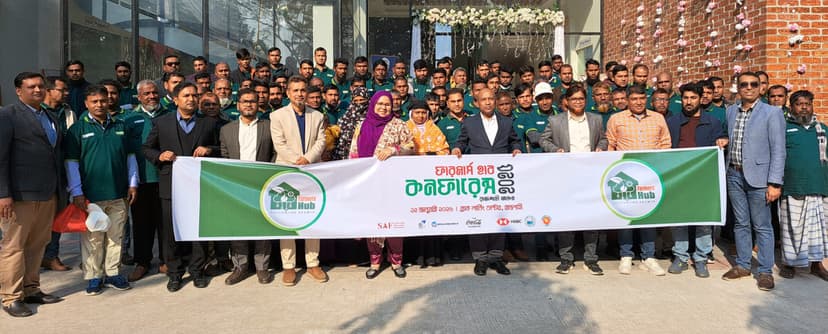
Farmers’ Hub Conference 2025 – Rajshahi
Building Climate-Resilient Market Systems in the Barind Tract On 12 January 2026, more tha...
Read More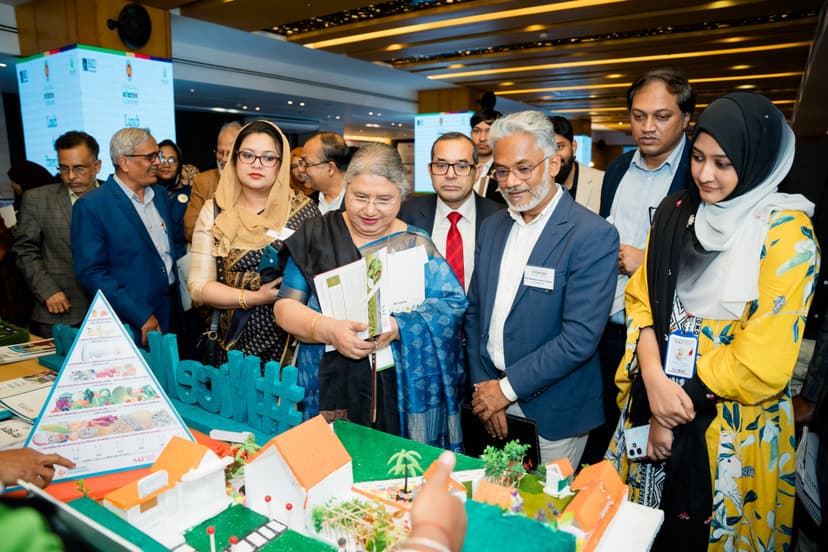
Schools Are Shaping a Healthier Future: SAF Bangladesh at International Nutrition Olympiad 2025
At the prestigious International Nutrition Olympiad (INO) 2025, Sustainable Agriculture Found...
Read More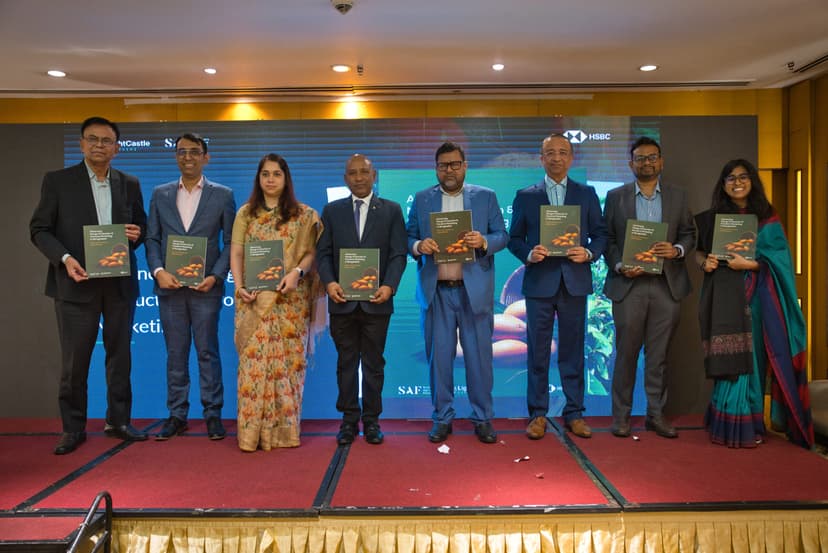
Advancing Mango Value Chains for Export Diversification in Bangladesh
As Bangladesh prepares for graduation from Least Developed Country (LDC) status in 2026, expo...
Read More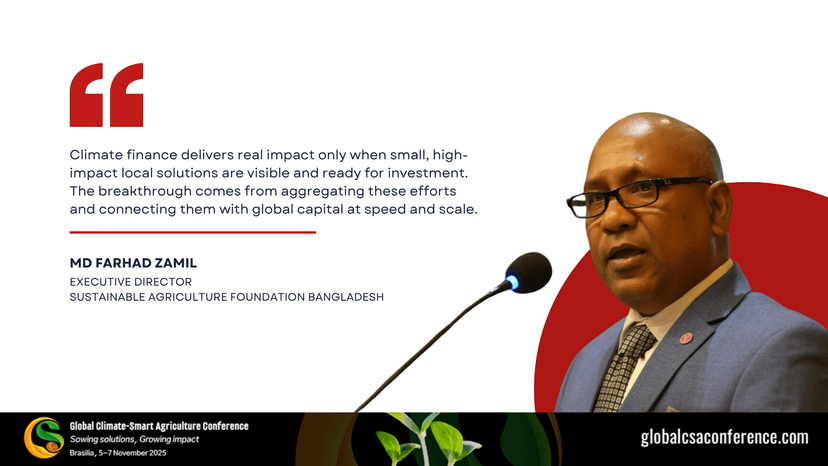
Md. Farhad Zamil, Executive Director of SAF Bangladesh, attended the Global Climate-Smart Agriculture Conference 2025 in Brazil
The Global Climate-Smart Agriculture Conference 2025, held from 5–7 November 2025 in Brazil, br...
Read More
Farmers’ Hub Agri-Mechanization Services – Driving Efficiency, Productivity, and Climate-Smart Farming
The Farmers’ Hub (FH) model under the IWET Project serves as a business-driven, farmer-centered pla...
Read More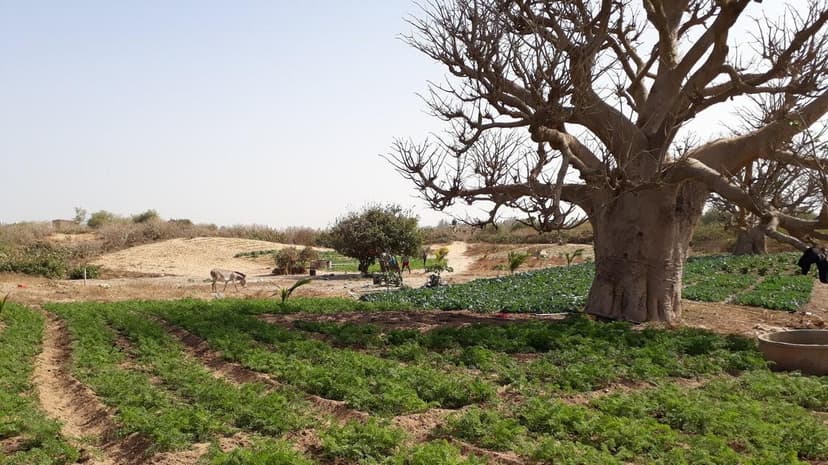
Rural Entrepreneurship and Youth Empowerment
What helps young people succeed in rural business? Rural transformation is vital for economic devel...
Read More
Harmonizing Agriculture with Disease Control through AWD
In our latest webinar, we offered a comprehensive perspective on the complex relationship between a...
Read More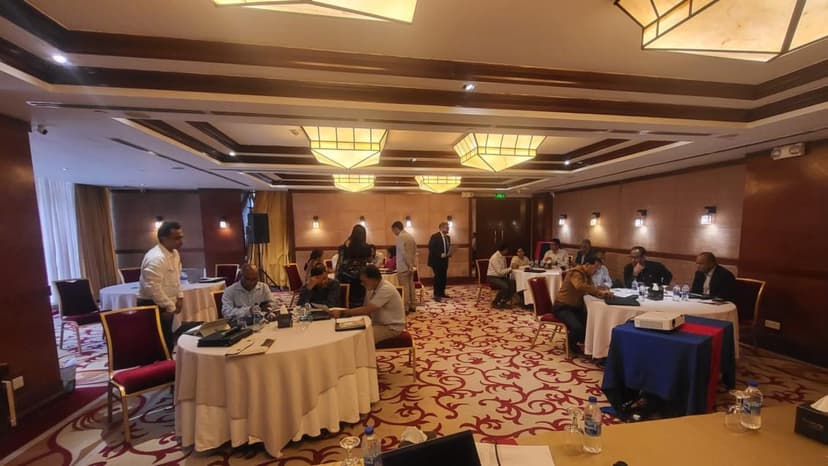
Shifting Focus to Climate-Smart Agriculture: The Importance of Stakeholder Engagement
Stakeholders from various sectors utilizing a newly developed climate-smart agriculture decision-su...
Read More
Green Trajectory: Transforming Emissions into Solutions
SFSA Bangladesh has launched a pioneering initiative that utilizes carbon credits to support smallh...
Read More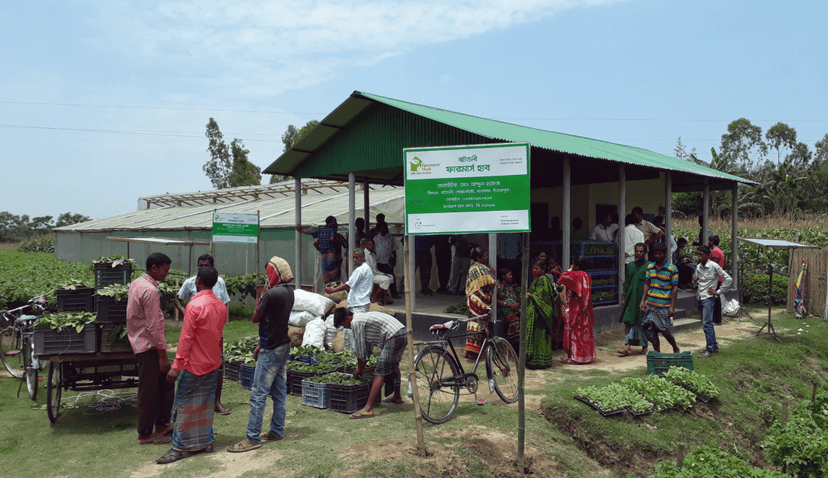
Agri-services Centers
In developing countries, many smallholders have no access to appropriate farming knowledge, technol...
Read More
Shifting the Delta along the Delta
Bangladesh is highly vulnerable to weather risks. Climate change is intensifying the situation. Sma...
Read More